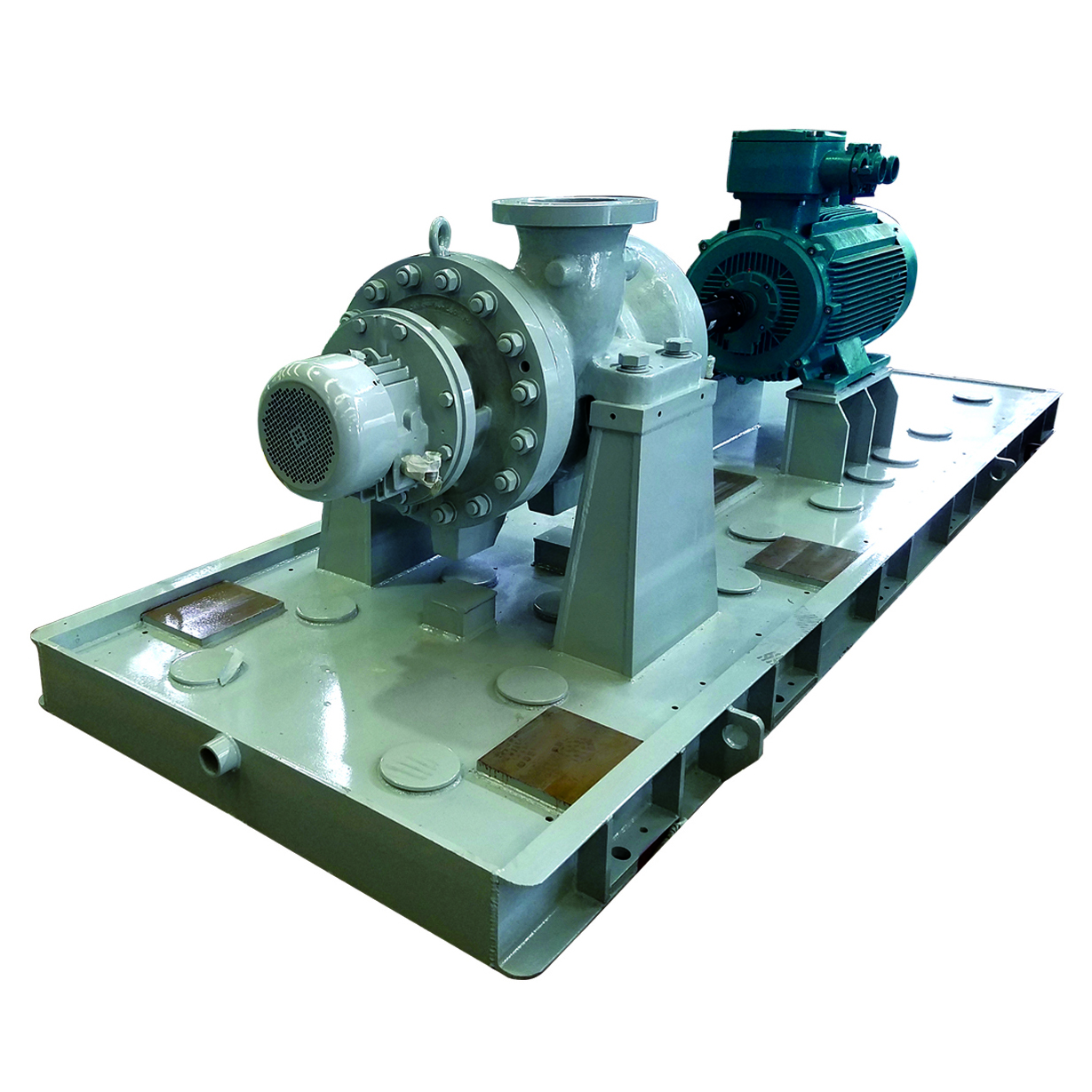
Horizontal Centrifugal Pump Installation Guide: Best Practices for Optimal Performance
Horizontal centrifugal pumps are critical assets in industrial operations, where their stable performance directly impacts productivity and cost efficiency. At JH PUMPS, we’ve distilled decades of expertise into this step-by-step installation guide to help you avoid common pitfalls and ensure long-term reliability.
A robust foundation is the cornerstone of pump stability:
Concrete base: Install the pump on a high-strength concrete foundation to minimize vibrations.
Anchor bolts & leveling: After positioning, use a precision level (on the discharge flange) to achieve ≤0.5mm/m initial leveling. Shim the base with ≥25mm-thick steel wedges near bolt holes.
Grouting: Pour non-shrink grout around anchor bolts and allow it to cure before partial tightening.
Pro Tip: Avoid "soft foot" by ensuring even shim contact across all support points.
Misalignment is a leading cause of premature failure:
Fine-tuning: Remove coupling components and re-level the unit to ≤0.2mm/m using jacking screws and shims.
Coupling alignment: Achieve ≤0.2mm axial/radial tolerance between pump and motor couplings. Use stainless steel shims (≥3mm, ≤5 layers) under the motor for thermal expansion compensation.
Critical Note: For high-temperature applications, perform final alignment at operating conditions.
Weld shims to the base to prevent displacement during operation.
Full-base grouting: Inject grout through designated ports until air escapes from vent holes. Cure for 24–48 hours before final bolt torquing.
Why It Matters: Incomplete grouting creates voids that amplify vibration.
Key specifications to prevent cavitation and stress:
Inlet piping:
Diameter: 1.5–2× pump inlet size with eccentric reducers (flat side up).
Straight-run: ≥3× pipe diameter upstream of the pump.
Essentials: Install a strainer (Y-type recommended) and isolation valve.
Outlet piping:
Reducer length: 5–7× diameter difference.
Components: Pressure gauge, control valve, and swing-check valve (to prevent reverse flow damage).
Avoid: Sharp bends or pipe supports that transfer weight to the pump casing.
Flange alignment: Maintain <2mm radial offset between pipe and pump flanges.
Flexible joints: Use spool pieces or expansion joints to isolate pump from pipe strain.
Support spacing: Follow ASME B31.3 guidelines for pipe hanger placement.
Red Flag: Excessive flange bolt force can distort the pump casing!
Cold alignment: Confirm ≤0.1mm coupling tolerance.
Thermal growth: For pumps operating above 80°C, recheck alignment at working temperature.
Coupling specs:
Diaphragm type: Gap = membrane thickness + (0–0.4mm).
Elastic sleeve: Maintain 3–5mm clearance.
Torque Sequence: Follow manufacturer’s cross-tightening pattern for even bolt loading.